How to Increase Neuroplasticity After Stroke: A Science-Backed Exercise Guide
NeuroRehab Team
Thursday, January 1st, 2026
Physical training proves to be one of the best ways to boost neuroplasticity after stroke. It improves disability, mobility, and physical fitness by a lot, even if patients start just days after symptoms appear. Research shows that exercise boosts functional outcomes and promotes axonal plasticity that helps repair brain structure after stroke.
Neuroplasticity After Stroke: How the Brain Rewires Itself for Recovery
NeuroRehab Team
Thursday, November 13th, 2025
Stroke stands as the second-leading cause of death and third-leading cause of disability worldwide. The global economic effects exceed US$721 billion. But neuroplasticity after stroke brings hope to millions of survivors through the brain’s natural power to rewire itself. The human brain can create new neural pathways despite stroke’s devastating effects. This lets patients relearn significant skills like walking, talking, and using affected limbs.
The First 72 Hours After Stroke: How Early Rehab Speeds Brain Recovery
NeuroRehab Team
Wednesday, October 22nd, 2025
Stroke ranks as the second leading cause of death worldwide and the third leading cause of combined mortality and disability. Every year, doctors report 13.7 million new stroke cases, and more than 100 million people live with stroke’s effects globally. Research into new stroke rehabilitation methods has become vital as studies show the first few hours and days after a stroke create the best window for recovery.
How to Regain Use of Your Arm After Stroke: Evidence-Based Recovery Guide
NeuroRehab Team
Tuesday, August 19th, 2025
Arm and Handlearnedlearned nonuseNeuroplasticitystroke
Stroke affects 80% of survivors with paralysis or weakness on one side of their body. This common outcome creates major challenges, especially when you have to learn how to regain use of arm after stroke. Many survivors still experience shoulder pain and arm problems months after their original stroke. About two-thirds cannot fully use their affected limb even six months after stroke.
Why High-Dose Repetition Matters in Stroke Rehab: Unlocking Neuroplasticity Through Intensity
NeuroRehab Team
Tuesday, August 5th, 2025
Stroke stands as the primary cause of long-term disability worldwide. It creates massive medical and financial burdens for about 80 million survivors across the globe . Standard rehabilitation efforts don’t prevent most patients from experiencing the most important disabilities as they enter the chronic phase of recovery .
Free Neuroplasticity CEU: How the Brain Rewires After Stroke
NeuroRehab Team
Saturday, June 7th, 2025
Stroke recovery does not happen because damaged brain tissue magically heals. It happens because the brain adapts.
This adaptive process is known as neuroplasticity. Neuroplasticity is the brain’s ability to reorganize, form new connections, and assign new roles to undamaged areas in response to injury, experience, and neurorehabilitation after stroke.
Stroke Therapy Research. What works?
NeuroRehab Team
Friday, January 13th, 2023
Arm and HandElectrical StimulationHand Function SplintsMental PracticeMirror TherapyNeuroplasticityStroke Statistics
Every 2.1 seconds, someone in the world suffers a stroke. Stroke is the #1 cause of long-term disability worldwide. Globally, there are over 15 million stroke survivors. With respect to the United States, there are approximately 5.1 million stroke survivors alive today in the US. It is the third leading cause of death in USA and the numbers are expected to double by 2030.
Stop Learned Non-Use to Improve Stroke Recovery
NeuroRehab Team
Wednesday, December 21st, 2022
If one asked 10 new stroke survivors the following question, what do you think they would say?
“Would you rather spend most of your time learning compensatory one-handed strategies with your unaffected side, or would you rather focus on improving strength, range of motion and function in your affected limb?” That’s a big question.
Stroke Plateaus are Not Permanent
NeuroRehab Team
Friday, November 18th, 2022
Hand Function SplintsNeuroplasticity
There is no expiration date on neuroplasticity.
Just like athletes and musicians, many stroke survivors will have periodic and temporary plateaus or setbacks as they continue to improve. It is a back-and-forth process. Improve a little, then a plateau occurs. Modify the training and improve some more. Then, here comes another plateau. Modify again. You get the idea.
Improve Results Following Stroke with These Simple Steps.
NeuroRehab Team
Monday, November 14th, 2022
Mental PracticeMirror TherapyNeuroplasticitypriming
Priming the Brain Works.
Better clinical outcomes following stroke are associated with interventions such as cortical priming resulting in increased excitability of the motor cortex (Catano et al).
Priming is a technique used to enhance the brain’s ability to re-balance the 2 hemispheres following a stroke. Priming interventions include invasive and non-invasive techniques and can be administered prior to or during therapy.
Be Like Mike. Mental Practice Improves Stroke Arm and Hand Weakness.
NeuroRehab Team
Friday, October 28th, 2022
Mental PracticeNeuroplasticity
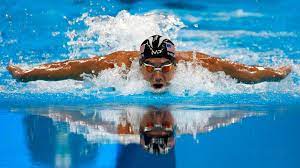
Be Like Mike.
Before each race, Michael Phelps, the 28-time Olympic medalist, would sit quietly and perform mental reps, imagining his performance step-by-step.
Rewiring the Brain After Stroke: The Science of Neuroplasticity and Why Reps Matter
NeuroRehab Team
Friday, October 7th, 2022
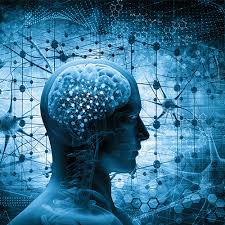
The human brain is one of the most fascinating and complex organs in the body. It houses over 100 billion neurons and forms more than 200 trillion synaptic connections. During a stroke, approximately 32,000 neurons die every second, totaling nearly 1.2 billion neurons lost in a typical event. While this may sound catastrophic, it represents only about 1% of the brain’s total neurons.
That means 99% of the brain remains intact. And with the right approach, it can compensate, adapt, and heal.
The Breakthrough of Neuroplasticity
In the 1980s, renowned neuroscientist Dr. Michael Merzenich helped prove that the adult brain is not hardwired—contrary to what many believed. His groundbreaking work revealed that the brain is capable of reorganizing itself by forming new neural connections, a phenomenon known as neuroplasticity.
This discovery has completely shifted our understanding of stroke rehabilitation. Rather than focusing on what was lost, modern therapies focus on what can be rewired.
Why Many Traditional Stroke Therapies Fall Short
Unfortunately, many conventional stroke rehab models abandon patients too early—long before neuroplasticity has had a chance to take hold. Standard clinical tests may not detect subtle signs of brain rewiring, such as micro-movements or emerging motor patterns.
As a result, therapy may be prematurely deemed ineffective, when in fact, the brain is just beginning to change. This is one of the greatest oversights in traditional care.
Repetition: The Catalyst for Rewiring
If you’re a clinician, ask yourself: “What did I do in today’s 45-minute session to truly drive neuroplasticity?” The typical therapy session includes only about 30 repetitions. Research suggests that it takes at least 300–400 quality reps per session to begin meaningful rewiring of the brain.
Consider sports training, music practice, or skill development. A baseball pitch, a piano scale, or an ice-skating spin takes thousands of reps to master. Stroke rehab is no different. Every repetition leaves a neurological footprint—a pathway for the next rep to follow. Over time, these paths become stronger, faster, and more automatic.
Time to Rethink Outdated Approaches
With today’s evolving technology and research-backed tools, we must challenge traditional concepts that no longer serve patients. Many old-school therapy methods—especially those unsupported by evidence—need to make way for protocols that prioritize repetition, engagement, and science-based strategies.
Therapists must be bold enough to ask, “Is this intervention truly helping my patient move forward?” If not, it’s time to pivot.
Learn More About the Soft-Wired Brain
Whether you’re a stroke survivor, a caregiver, or a rehab professional, we highly recommend exploring Dr. Merzenich’s book: Soft-Wired: How the New Science of Brain Plasticity Can Change Your Life. It offers an accessible and inspiring look at how neuroplasticity works and what it means for recovery.
Rewiring the brain doesn’t happen overnight. It takes effort, consistency, and intelligent therapy. But it does happen—one rep at a time.
If you’re ready to embrace evidence-based therapy that unlocks the brain’s potential, make sure your approach is grounded in science, driven by repetition, and focused on lasting functional gains.
Gondola Medical Foot Device Helps Patients with Walking and Balance Disorders
NeuroRehab Team
Wednesday, March 24th, 2021
Electrical StimulationLegNeuroplasticity
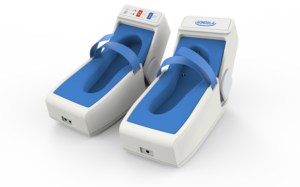
The Gondola Medical Device provides a non-invasive mechanical stimulation based on pressure pulses. The pulses are applied in two specific areas of both feet, the head of the big toe and the first metatarsal joint. The treatment comprises four cycles of stimulation; one cycle includes a six-second stimulation of each of the four target areas (total: 24 sec). The overall treatment consists of four repetitions of the stimulation cycle (total: 2 minutes). This method of treatment is called “Automated Mechanical Peripheral Stimulation” (AMPS).
How Many Repetitions are Needed for Stroke Recovery and Neuroplasticity?
Lynette Diaz, COTA/L
Tuesday, June 9th, 2020
How many repetitions does it take to create changes in the brain? How many repetitions must one complete before movement is strong, volitional and functional? Research indicates the number is high and the answer is more complex than we may think. Factors to be considered are, quality of repetitions, attention during repetitions, number of joints involved in movement, area of injury in the brain to name a few. It would stand to reason the more complex a movement is the more repetitions would be required.
Rewiring the Brain Through Gratitude
Lynette Diaz, COTA/L
Monday, June 8th, 2020

Attitude of Gratitude.
After experiencing a traumatic injury such as a stroke, it may be hard for many people to perceive daily things in a positive light. After all, life is not what it was before. Many stroke survivors go from an independent lifestyle to depending on a loved one. It is evident to see how there is not much room for positive thought.
What You Need to Know About the Stroke Recovery Timeline
NeuroRehab Team
Wednesday, February 19th, 2020
Arm and HandContracture SplintElectrical StimulationHand Function SplintsMental PracticeMirror TherapyNeuroplasticityStretchingSubluxation Slings

You are eager to return to your normal life, so you are ready to learn more about the typical timeline for recovery after a stroke. Keep reading to get some answers to common questions:
- Am I going to get better after my stroke?
- How long is rehab after a stroke going to take?
- What can I do to help my stroke recovery?
Walking After Stroke | Recovery, Therapy & Safety Tips
NeuroRehab Team
Saturday, January 25th, 2020
Electrical StimulationFoot Drop BraceLegMobilityNeuroplasticity
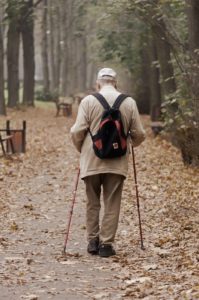
A stroke can impact any number of life skills. But the ability to walk can be one of the most significant. Many people identify walking as an important goal after they experience a stroke. This makes sense because walking is related to so many daily routines. Every stroke survivor is different. Some stroke survivors might need help to walk a few feet. Other individuals might recover significantly and be able to walk long distances. This article will provide post-stroke walking education for a range of skill levels.
Effect of a task-oriented rehabilitation program on upper extremity recovery following motor stroke: The ICARE randomized clinical trial.
NeuroRehab Team
Friday, October 11th, 2019
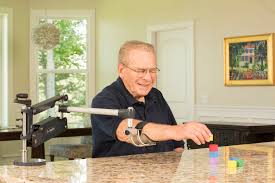
Winstein CJ, Wolf SL, Dromerick AW, et al. JAMA 2016;315(6):571-581.
This clinical trial recruited 361 participants, approximately 45 days post-stroke with mild to moderate impairments, for upper extremity retraining in order to improve functional use of the impaired upper extremity. Participants received either a new problem solving approach, Accelerated Skill Acquisition Program (ASAP) for 30, 1 hour sessions, Dose Equivalent Usual Customary Care (DEUCC), or Usual and Customary Care which varied from 0-46 hours. Findings demonstrated that all three groups improved in function (Wolf Motor Function Test) and quality of life (Stroke Impact Scale).
Mobility and Leg Recovery Following Stroke and Other Neurological Injuries
NeuroRehab Team
Friday, August 2nd, 2019
BiofeedbackBody Weight SupportContracture SplintElectrical StimulationExercise AidsFoot Drop BraceLegLeg BikeMobilityNeuroplasticityRoboticsVirtual Reality
One of the most common impairments resulting from stroke is paralysis, which can affect a portion or the entire side of the body. Problems with body posture, walking, and balance can be significant. Two thirds of the patients are unable to walk without assistance in the first week after stroke (Jorgensen HS et al. Arch Phys Med Rehabil, 1995). Approximately 35% of survivors with initial paralysis of the leg do not regain useful walking function (Hendricks HT et al. Arch Phys Med Rehabil, 2002). Although 65% to 85% of stroke survivors learn to walk independently by 6 months post stroke, gait abnormalities and poor endurance persists through the chronic stages of the condition (Wade DT et al. Scand J Rehabil Med, 1987).
The Use of Aquatic Therapy as a Stroke Treatment
Dorothee Zuleger, MOT, OTR/L, DRS
Monday, January 28th, 2019
Aquatic TherapyNeuroplasticity
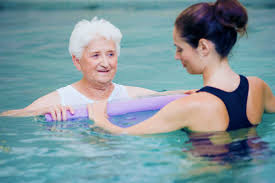
What is Aquatic Therapy?
Aquatic therapy is a type of therapy that takes place in a pool or other aquatic environment. It is a physical and medical rehabilitation specialty that requires the supervision of a trained professional.
Left Side Neglect Following Stroke – There is more to the picture
Dorothee Zuleger, MOT, OTR/L, DRS
Thursday, April 26th, 2018
CognitionNeuroplasticitysensory stimulationVisionVisual Aids
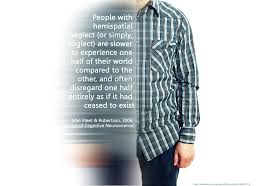
Damage to one side of the brain can cause a lack of attention to the opposite side. Most common is an inattention or neglect to the left side of the body after an injury to the right side of the brain due to stroke or traumatic brain injury. The brain attends to the right side with both hemispheres but attends to the left side with only the right hemisphere.
Transcranial Magnetic Stimulation (TMS) May Help Stroke Survivors Improve Recovery
NeuroRehab Team
Tuesday, March 27th, 2018
Electrical StimulationNeuroplasticity
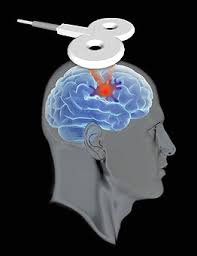
Anyone who’s done physical or occupational therapy knows how hard it is not to cheat. The body wants to get back to work, and the easiest way to do that is to use the uninjured limbs to help out. The therapist is there to make sure it’s the injured limb that’s doing the work.
Intensive Arm Exercises After Stroke Improves Strength and Function
NeuroRehab Team
Wednesday, January 17th, 2018
Arm and HandElectrical StimulationNeuroplasticityOccupational TherapyRobotics
Intensive therapy can help people who have suffered a stroke recover motor function—even if the treatment begins a year or more after the stroke occurred. After a stroke, the brain and body can start recovering immediately and can show improvement up to six months afterward.
Improve Functional Mobility With Lower Extremity Stroke Technology
NeuroRehab Team
Tuesday, December 26th, 2017
BalanceBody Weight SupportElectrical StimulationExercise AidsFoot Drop BraceLegLeg BikeMirror TherapyMobilityNeuroplasticity
One of the most common impairments resulting from stroke is paralysis, which can affect a portion or the entire side of the body. Problems with body posture, walking, and balance can be significant. A patient’s rehabilitation should start as soon as he or she is stable. That could be anywhere from a couple of days to a few weeks or longer. Established guidelines, as well as a huge body of literature, insist that the earlier therapy is initiated the better.
Neuro Rehab Products. What’s right for me?
NeuroRehab Team
Thursday, April 27th, 2017
Arm and HandBalanceCognitionDysphagiaFoot Drop BraceLegNeuroplasticitySubluxation SlingsVision
Listed below are various clinical product categories that you may have learned while in therapy. Feel free to click on any category to see a list of products that may be appropriate for your needs.
Stroke/Neuro Products That Improve Strength and Function
NeuroRehab Team
Monday, April 3rd, 2017
Arm and HandCognitionCommunicationFoot Drop BraceLegMobilityNeuroplasticityVision
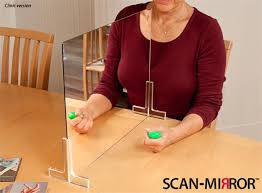
It is true that recovering from a stroke will be an uphill battle for many, however, it is also accurate that the latest research findings regarding neuro recovery are more promising than ever before. How serious are you with embracing evidence into your practice? As a clinician, are you stuck using numerous theoretical-based treatment concepts that have not scientifically been proven to be effective?
Listed below are some of the common interventions supported by research that have shown positive results. How many of the below techniques are in your current therapy toolbox? If just a few, then why?
Stroke Recovery Using Constraint-Induced Movement Therapy (CIMT)
NeuroRehab Team
Monday, January 23rd, 2017
Arm and HandCIMTNeuroplasticity
What is it?
Constraint-induced movement therapy (CI, CIT, or CIMT) is a form of rehabilitation therapy that improves upper extremity function in stroke and other neurological injuries by increasing the use of their affected upper limb. The focus of CIMT is to combine restraint of the unaffected limb and intensive use of the affected limb. Types of restraints include a sling, a splint, a sling combined with a resting hand splint, a half glove, and a mitt. Determination of the type of restraint used for therapy depends on the required level of safety vs. intensity of therapy.
Virtual Reality And Gaming Technology Helps Stroke Patients Recover
NeuroRehab Team
Tuesday, November 15th, 2016
NeuroplasticityVirtual Reality
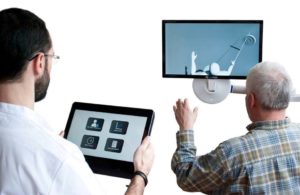
There is strong evidence that repetitive task specific training techniques improve upper extremity function. Task training yields long lasting cortical reorginization specific to the corresponding areas being used. Traditional treatment interventions are based primarily on routine exercises and/or purposeful activities. For many patients, the road to recovery is long and difficult and clinicians are challenged with the daunting task of maintaining patient motivation and compliance while alleviating boredom. Computer based games and virtual reality have recently emerged as novel strategies to maintain motivation and compliance while providing the necessary repetitive training.
New Stroke App Recommends Evidence-Based Treatment For Arm and Hand Impairment
NeuroRehab Team
Friday, October 21st, 2016
AppsArm and HandNeuroplasticity
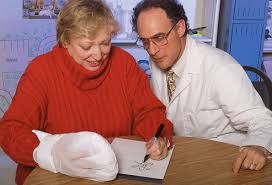
It is true that recovering from a stroke will be an uphill battle for many, however, it is also accurate that the latest research findings regarding neuro recovery are more promising than ever before. How serious are you with embracing evidence into your practice?
Top 7 Stroke Apps for Cognitive Deficits
NeuroRehab Team
Thursday, September 29th, 2016
AppsCognitionmemoryNeuroplasticity
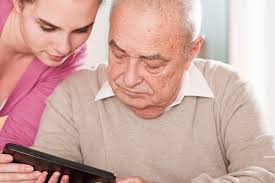
Damage to the brain after a stroke can cause many cognitive changes. Doing things that once were easy may now be hard. Problems with memory and thinking are very common after a stroke and most people will have some difficulties. After a stroke, cognitive rehabilitation can aid the mind just as physical therapy aids the body, according to Psych Central, an online mental health and psychology network. The purpose of cognitive therapy is to improve damaged mental abilities and language skills caused by a stroke.
Leg and Mobility Neuro Stroke Courses
NeuroRehab Team
Tuesday, September 13th, 2016
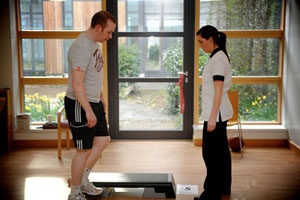
Are you caught up with the latest advances in neurorehabilitation? Find relevant stroke neuro courses below to be sure.
Top Stroke Treatment and Technology To Improve Recovery and Function.
NeuroRehab Team
Wednesday, September 7th, 2016
Arm and HandCommunicationLegNeuroplasticityVision
Following an extensive search of 100’s of stroke rehabilitation products and programs, we have summarized the best available products currently on the market for stroke recovery. The products are organized into relevant categories list below. Feel free to click on any category to see a list of products that may be appropriate for your needs.
10 Apps That Assist Stroke Patients With Vision Loss.
NeuroRehab Team
Monday, August 15th, 2016
AppsNeuroplasticityVisionVisual Aids
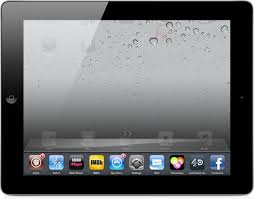
Most people who have decreased vision or double vision after a stroke do not fully recover. Some recovery is possible and it usually happens in the first few months after a stroke.
Stroke patients in wheelchairs able to walk again after stem cell transplant.
NeuroRehab Team
Saturday, July 23rd, 2016
LegMobilityNeuroplasticityStem Cell
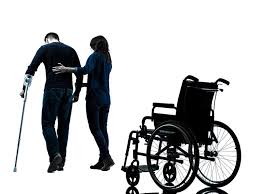
Top 10 Hand & Arm Stroke Exercise Tips for Recovery
NeuroRehab Team
Monday, July 11th, 2016
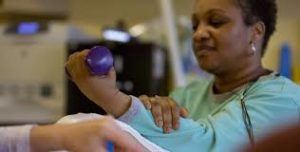
Amit Kumar, Occupational Therapist, LS Life Skills Therapy Services Inc., Surrey, BC
Every stroke survivor’s impairment is unique. By doing regular functional activities and exercises, you can increase your quality of movement and independence in all stages following stroke. Activity may be too easy or too hard depending on the extent of impairment and function. Your occupational therapist can help you develop a daily activity and exercise program appropriate for you. Activities and exercises to improve your hand function should be simple and done at home at any time.
Hand Mobility Exercises and Stretches Following a Stroke
NeuroRehab Team
Thursday, June 16th, 2016
Arm and HandContracture SplintElectrical StimulationExercise AidsHand Function SplintsNeuroplasticity
The latest research shows that the brain is capable of reorganizing after a stroke. Therefore, arm and hand recovery is more possible than previously thought. However, in order to improve function in the upper extremity, the client must be willing to incorporate the affected side purposefully, functionally, and repeatedly.
Listed below are 2 good videos that review simple ways to stretch and exercise the affected hand and fingers.
What is a Stroke? Can I Recover?
NeuroRehab Team
Thursday, June 9th, 2016
NeuroplasticityStroke Statistics
A stroke is a “brain attack”. It occurs when blood flow to an area of brain is cut off. When this happens, brain cells are deprived of oxygen and begin to die. When brain cells die during a stroke, abilities controlled by that area of the brain such as memory and muscle control are lost.
Stroke can be caused either by a clot obstructing the flow of blood to the brain (called an ischemic stroke) or by a blood vessel rupturing and preventing blood flow to the brain (called a hemorrhagic stroke). A TIA(transient ischemic attack), or “mini stroke”, is caused by a temporary clot.
Stroke Exercise Videos for the Arm and Leg
NeuroRehab Team
Monday, May 30th, 2016
Arm and HandBalanceExercise AidsLegNeuroplasticity
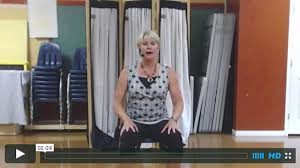
Recovering from a stroke can be quite challenging from both a psychological and physical perspective. In addition to completely experiencing a life-changing event, staying motivated with a daily intensive home exercise program can be a struggle. Once a client is discharged from the hospital, it will be important to maintain or improve their recovery by beginning an aggressive home exercise program immediately.
Stroke Arm Treatment: Using Mobile Arm Supports For Function and Exercise.
NeuroRehab Team
Tuesday, May 24th, 2016
Arm and HandMobile Arm SupportsNeuroplasticity
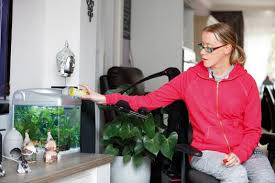
Stroke is one of the main causes of disability throughout the world. Due to hemorrhagic or ischemic damage to brain, many clients will suffer from impaired strength leading to poor gross motor movements and motor planning. In order to perform every day tasks such as grooming, eating, typing on a computer, or writing, adequate proximal strength (shoulder/elbow) is required to allow for normal distal control (hand/wrist).
Arm and Hand Stroke Exercises Using Mental Practice
NeuroRehab Team
Monday, May 16th, 2016
Mental PracticeNeuroplasticity
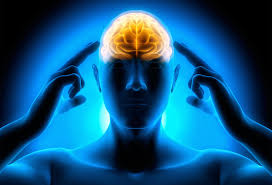
A stroke is the rapid loss of brain function(s) due to disturbance in the blood supply to the brain. When you have an ischemic stroke, there is an interruption, or reduction, of the blood supply. Eighty percent of all strokes occur due to ischemia. With a hemorrhagic stroke, there is bleeding in the brain. After about 4 minutes without blood and oxygen, brain cells become damaged and may die. When brain cells are damaged or die, the body parts controlled by those cells cannot function. The loss of function may be mild or severe and temporary or permanent. This depends on where and how much of the brain is damaged and how fast the blood supply can be returned to the affected cells.
Mirror Therapy Exercises for Improving Arm and Hand Function After Stroke
NeuroRehab Team
Thursday, April 21st, 2016
Arm and HandMental PracticeMirror TherapyNeuroplasticity
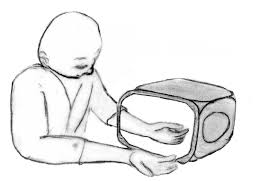
Mirror therapy, a treatment technique first described by V.S. Ramachandran for phantom limb pain following amputation, is a form of motor imagery in which a mirror is used to process visual feedback about motor performance of the unaffected body part as it performs various movements. It is primarily used to speed up and improve motor function after stroke and other neurological disorders.
Vision Recovery Following Stroke
NeuroRehab Team
Thursday, March 17th, 2016
NeuroplasticityVirtual RealityVisionVisual Aids
Approximately 30% of all stroke patients suffer from post-stroke visual impairment (Sand KM. Acta Neurol Scand Suppl. 2013). Following a stroke or other neurological injuries, various types of vision deficits can occur including the inability to recognize objects, color vision deficits and difficulty with perceiving various types of motion. Approximately 20% experience permanent visual deficits (Romano JG. J of Neurol Sci. 2008). According to the National Stroke Association, homonymous hemianopia, which is the loss of one half of the visual field in each eye, is the most common visual disorder.
Arm and Hand Recovery Following Stroke and Other Neurological Injuries
NeuroRehab Team
Friday, February 26th, 2016
Arm and HandArm BikeBiofeedbackElectrical StimulationExercise AidsHand Function SplintsMirror TherapyMobile Arm SupportsNeuroplasticityRoboticsSubluxation SlingsVirtual Reality
The latest research shows that the brain is capable of rewiring and adapting after stroke. Therefore, arm and hand recovery is more possible than previously thought. However, in order to improve function in the upper limb, the client must be willing to incorporate the affected side purposefully, functionally, and repeatedly. In addition to functional training, other beneficial strategies include strength training, mental imagery, robotics, and gravity compensation.
Below are the key takeaway’s that highlight the current thinking from the scientific community.
Stroke Overview and Recovery – Key Facts
NeuroRehab Team
Thursday, February 25th, 2016
NeuroplasticityStroke Statistics
What is a Stroke?
A stroke, or cerebrovascular accident (CVA), is the rapid loss of brain function(s) due to disturbance in the blood supply to the brain. When you have an ischemic stroke, there is an interruption, or reduction, of the blood supply. Eighty percent of all strokes occur due to ischemia. With a hemorrhagic stroke, there is bleeding in the brain. After about 4 minutes without blood and oxygen, brain cells become damaged and may die. When brain cells are damaged or die, the body parts controlled by those cells cannot function. The loss of function may be mild or severe and temporary or permanent. This depends on where and how much of the brain is damaged and how fast the blood supply can be returned to the affected cells.