Virtual Reality Stroke Rehabilitation: Does VR Therapy Work?
NeuroRehab Team
Tuesday, November 18th, 2025
Stroke impacts more than 17 million people worldwide each year. It remains a leading cause of death and disability. VR stroke rehabilitation brings new hope to the 80% of patients who struggle with movement after having a stroke. The numbers tell a sobering story – only 25% of stroke patients can handle daily activities without help.
Constraint-Induced Movement Therapy After Stroke: Evidence, Modified Protocols, and Clinical Implementation
NeuroRehab Team
Tuesday, July 29th, 2025
Regaining meaningful use of a paretic arm after stroke is both a challenge and an opportunity. Constraint-Induced Movement Therapy (CIMT) remains one of the most powerful, evidence-based interventions for improving upper-limb recovery.
Virtual Rehabilitation Using Nintendo Wii and Conventional Physical Therapy Effectively Treat Post-Stroke Hemiparetic Patients.
NeuroRehab Team
Tuesday, December 3rd, 2019
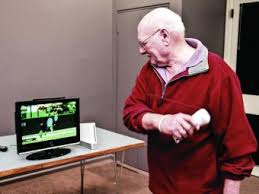
Da Silva Ribeiro NM, Ferraz DD, Pedreira E, et.al. Topics in Stroke Rehabilitation 2015; 22: 299-305.
This study compared the use of the Wii Nintendo to a conventional physical therapy program to improve both sensorimotor activity (measured by the total Fugl-Meyer assessment score) and quality of life (measured using the SF-36). Thirty stroke survivors were randomly assigned to either group and all participants received two hourly sessions for each of two months.
Mobility and Leg Recovery Following Stroke and Other Neurological Injuries
NeuroRehab Team
Friday, August 2nd, 2019
BiofeedbackBody Weight SupportContracture SplintElectrical StimulationExercise AidsFoot Drop BraceLegLeg BikeMobilityNeuroplasticityRoboticsVirtual Reality
One of the most common impairments resulting from stroke is paralysis, which can affect a portion or the entire side of the body. Problems with body posture, walking, and balance can be significant. Two thirds of the patients are unable to walk without assistance in the first week after stroke (Jorgensen HS et al. Arch Phys Med Rehabil, 1995). Approximately 35% of survivors with initial paralysis of the leg do not regain useful walking function (Hendricks HT et al. Arch Phys Med Rehabil, 2002). Although 65% to 85% of stroke survivors learn to walk independently by 6 months post stroke, gait abnormalities and poor endurance persists through the chronic stages of the condition (Wade DT et al. Scand J Rehabil Med, 1987).
Virtual Reality And Gaming Technology Helps Stroke Patients Recover
NeuroRehab Team
Tuesday, November 15th, 2016
NeuroplasticityVirtual Reality
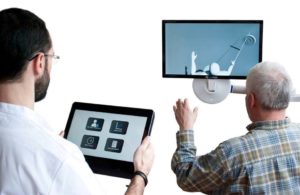
There is strong evidence that repetitive task specific training techniques improve upper extremity function. Task training yields long lasting cortical reorginization specific to the corresponding areas being used. Traditional treatment interventions are based primarily on routine exercises and/or purposeful activities. For many patients, the road to recovery is long and difficult and clinicians are challenged with the daunting task of maintaining patient motivation and compliance while alleviating boredom. Computer based games and virtual reality have recently emerged as novel strategies to maintain motivation and compliance while providing the necessary repetitive training.
Vision Recovery Following Stroke
NeuroRehab Team
Thursday, March 17th, 2016
NeuroplasticityVirtual RealityVisionVisual Aids
Approximately 30% of all stroke patients suffer from post-stroke visual impairment (Sand KM. Acta Neurol Scand Suppl. 2013). Following a stroke or other neurological injuries, various types of vision deficits can occur including the inability to recognize objects, color vision deficits and difficulty with perceiving various types of motion. Approximately 20% experience permanent visual deficits (Romano JG. J of Neurol Sci. 2008). According to the National Stroke Association, homonymous hemianopia, which is the loss of one half of the visual field in each eye, is the most common visual disorder.
Arm and Hand Recovery Following Stroke and Other Neurological Injuries
NeuroRehab Team
Friday, February 26th, 2016
Arm and HandArm BikeBiofeedbackElectrical StimulationExercise AidsHand Function SplintsMirror TherapyMobile Arm SupportsNeuroplasticityRoboticsSubluxation SlingsVirtual Reality
The latest research shows that the brain is capable of rewiring and adapting after stroke. Therefore, arm and hand recovery is more possible than previously thought. However, in order to improve function in the upper limb, the client must be willing to incorporate the affected side purposefully, functionally, and repeatedly. In addition to functional training, other beneficial strategies include strength training, mental imagery, robotics, and gravity compensation.
Below are the key takeaway’s that highlight the current thinking from the scientific community.