Upper Limb Recovery After Stroke: Evidence-Based Benchmarks for FMA-UE and ARAT
NeuroRehab Team
Thursday, July 17th, 2025
Understanding the natural trajectory of upper-limb motor recovery after stroke is essential for setting realistic goals and optimizing rehabilitation.
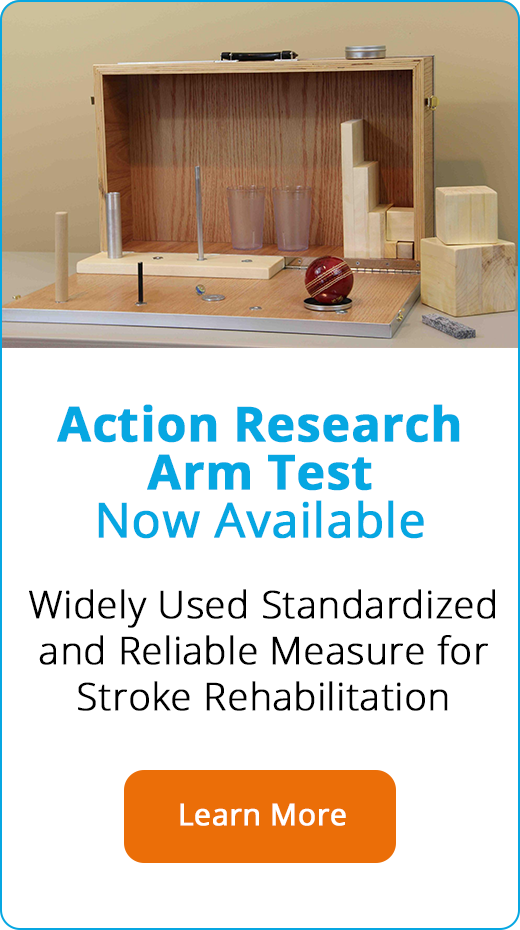
Kolmos et al.’s recent systematic review and meta-analysis synthesizes outcomes from usual-care groups to quantify expected gains on two gold-standard measures: the Fugl-Meyer Assessment of Upper Extremity (FMA-UE) and the Action Research Arm Test (ARAT) during the subacute phase of recovery.
These benchmarks provide clinicians with an evidence-based reference point for tracking progress and help researchers design adequately powered clinical trials.
Why Recovery Benchmarks Matter
Each year, more than 13 million people experience a stroke worldwide. Nearly half of survivors live with persistent arm and hand paresis that limits independence and quality of life.
Advanced interventions such as constraint-induced movement therapy, robotics, and neuromodulation receive significant attention. However, usual care remains the foundation of rehabilitation globally.
Until recently, clinicians lacked consolidated data describing what “typical” recovery looks like under standard rehabilitation conditions.
Benchmarks matter because they help answer key questions:
- Is my patient progressing as expected?
- Should therapy intensity be modified?
- Are we seeing clinically meaningful change?
Study Objectives
The review aimed to:
- Quantify the magnitude and rate of upper-extremity improvement during the first six months post-stroke under usual care
- Identify covariates that influence recovery, including baseline severity and lesion characteristics
Reliable recovery estimates allow therapists to counsel patients more accurately and enable researchers to calculate appropriate sample sizes for future trials.
Methods Overview
Search Strategy and Inclusion Criteria
Following PRISMA guidelines, the authors searched major databases through December 2024 for studies reporting FMA-UE or ARAT scores at two or more time points in usual-care groups.
Inclusion criteria required:
- Adults within six months post-stroke
- Upper-limb paresis
- Usual-care cohorts of at least ten participants
- Reported baseline and follow-up outcome scores
Thirty-five randomized trials and nineteen observational cohorts were included, totaling nearly 2,800 participants.
Data Analysis
Meta-analysis calculated mean changes in FMA-UE and ARAT scores at 4, 12, and 24 weeks post-stroke.
Meta-regression explored the influence of baseline motor severity, corticospinal tract lesion burden, and initial functional scores.
Key Findings: Expected Gains Under Usual Care
Recovery follows a nonlinear but predictable trajectory during the subacute phase.
At 4 Weeks
- FMA-UE: approximately +10 points
- ARAT: approximately +8 points
Importantly, the minimal clinically important difference for FMA-UE is approximately 5 points. This means most patients achieve clinically meaningful improvement within the first month.
At 12 Weeks
FMA-UE gains average approximately +12 points from baseline.
At 24 Weeks
FMA-UE gains reach approximately +16 points on average.
Recovery is most rapid early and slows over time, consistent with known neuroplasticity patterns.
Severity Matters
Baseline impairment strongly predicts recovery magnitude.
Patients with mild to moderate deficits improve faster and achieve larger gains than those with severe paresis.
Higher initial FMA-UE scores and smaller corticospinal tract lesion volumes were associated with better outcomes.
This reinforces the importance of early assessment and realistic prognostic counseling.
Clinical Implications
Goal Setting
Benchmarks allow therapists to establish data-driven SMART goals. For example, a patient with moderate impairment might reasonably target a 10-point FMA-UE improvement within the first month.
Therapy Planning
Patients predicted to recover more slowly may benefit from increased dosage or adjunctive strategies such as mental practice, task-specific training, or neuromuscular electrical stimulation.
Progress Monitoring
Comparing individual progress against benchmark curves helps identify deviations early. Slower-than-expected improvement should prompt reassessment of intensity, adherence, comorbidities, or secondary complications such as spasticity.
Limitations to Consider
Usual care varied across countries and settings in therapy content and intensity. This introduces heterogeneity into pooled results.
The findings apply specifically to subacute hemiparetic stroke within six months of onset. Chronic stroke trajectories may differ substantially.
Clinicians should apply benchmarks thoughtfully within the context of individual patient characteristics.
Integrating Benchmarks Into Practice
To apply these findings clinically:
- Assess baseline FMA-UE and ARAT within the first two weeks
- Set intermediate goals at 4 and 12 weeks
- Re-evaluate at standardized intervals
- Adjust intervention intensity based on measured progress
- Document objective outcomes to support quality assurance and reimbursement
Standardized measurement strengthens clinical reasoning and supports evidence-based decision making.
Future Directions
Future research should focus on:
- Standardizing usual-care protocols to reduce variability
- Identifying biomarkers that improve individualized recovery prediction
- Comparing emerging therapies directly against benchmark trajectories
- Extending follow-up beyond six months to map long-term recovery
Conclusion
Upper limb recovery after stroke follows a measurable trajectory during the first six months.
Under usual care, clinicians can expect approximately 10 FMA-UE points at four weeks and up to 16 points by 24 weeks on average.
Using these benchmarks enables more precise goal setting, better therapy planning, and improved research design.
Objective measurement is not optional in modern stroke rehabilitation. It is the foundation for optimizing outcomes.
- Kolmos M, Munoz-Novoa M, Sunnerhagen K, Alt Murphy M, Kruuse C. Upper-extremity motor recovery after stroke: A systematic review and meta-analysis of usual care in trials and observational studies. J Neurol Sci. 2025;468:123341. doi:10.1016/j.jns.2024.123341
- Page SJ, Fulk GD, Boyne P. Clinically important differences for the Fugl-Meyer Assessment in stroke: Validation of minimal detectable change and clinically important difference. Phys Ther. 2012;92(3):618–625. doi:10.2522/ptj.20110271
- Lang CE, Bland MD, Bailey RR, Schaefer SY, Birkenmeier RL. Assessment of upper extremity impairment, function, and activity after stroke: Foundations for clinical decision making. J Hand Ther. 2013;26(2):104–115. doi:10.1016/j.jht.2013.01.008
- Lyle RC. A performance test for assessment of upper limb function in physical rehabilitation treatment and research. Int J Rehabil Res. 1981;4(4):483–492. doi:10.1097/00004356-198112000-00005
- Moher D, Liberati A, Tetzlaff J, Altman DG; PRISMA Group. Preferred reporting items for systematic reviews and meta-analyses: The PRISMA statement. PLOS Med. 2009;6(7):e1000097. doi:10.1371/journal.pmed.1000097