Stroke Rehab for the Upper Limb: Why Electrode Placement Matters in Hand and Arm Stimulation
NeuroRehab Team
Tuesday, July 5th, 2016
Electrical StimulationElectrode Placement
Maximizing Stroke Recovery with Electrical Stimulation: Why Electrode Placement Matters
Electrical stimulation, often referred to as e-stim, NMES (neuromuscular electrical stimulation), or FES (functional electrical stimulation), has become a cornerstone intervention in modern stroke rehabilitation. When used correctly, it can help stroke survivors regain movement, improve strength, reduce spasticity, and restore functional use of affected limbs. When used incorrectly, however, it can produce minimal results, discomfort, or frustration for both patients and clinicians.
That difference often comes down to one overlooked variable: electrode placement.
Stroke recovery is not simply about turning a device on and hoping muscles respond. It is about delivering precise, intentional stimulation to the right muscles at the right time in the recovery process. Proper electrode placement ensures that electrical stimulation targets the correct motor points, activates the intended muscle groups efficiently, and reinforces meaningful brain-muscle connections that drive neuroplastic change.
For stroke survivors, especially those with weakness, paralysis, or abnormal muscle tone, this precision matters. Poor placement can lead to inefficient contractions, rapid fatigue, or compensatory movement patterns. Accurate placement, on the other hand, can make electrical stimulation feel smoother, more comfortable, and far more effective, even at lower intensities.
In this guide, we will break down:
-
How electrical stimulation supports stroke rehabilitation
-
Why electrode placement is the key to maximizing results
-
Practical tips to improve comfort, efficiency, and outcomes
-
Common muscle groups treated with e-stim after stroke
Whether you are a therapist refining your clinical technique or a stroke survivor exploring electrical stimulation as part of a home program, understanding electrode placement is essential for getting the most out of this powerful rehabilitation tool.
Electrode Placement: The Key to Effective E-Stim Therapy
The effectiveness of e-stim largely depends on one crucial factor: proper electrode placement. If electrodes are not placed accurately over the motor points of the targeted muscles, the stimulation may be uncomfortable, inefficient, or entirely ineffective.
Motor points are the locations where the motor nerve enters the muscle, and targeting these spots ensures that the muscle contracts with the least amount of electrical current. Proper placement enhances comfort, maximizes efficiency, and reduces fatigue.
Tips for Optimal Electrode Placement:
- Use muscle charts or motor point maps as a guide
- Clean and prepare the skin to improve conductivity
- Ensure consistent contact with the skin—no gaps or air pockets
- Test placement while monitoring the visible muscle response
- Consult with a therapist for customized guidance
When and How to Use Electrical Stimulation Post-Stroke
Electrical stimulation can be used in both clinical settings and at home under supervision. It may be appropriate in the acute, subacute, and chronic stages of stroke recovery. Protocols can vary, but a general recommendation includes sessions of 20–60 minutes, several times per week, depending on individual needs and tolerance.
Functional electrical stimulation (FES) can also be used during active movement tasks such as walking or grasping objects—providing real-time assistance and training the brain-muscle connection through repetitive, goal-oriented practice.
Commonly Treated Areas in Stroke Rehab with E-Stim
- Wrist and finger extensors: Improve hand opening and function
- Shoulder stabilizers: Reduce subluxation and promote joint alignment
- Ankle dorsiflexors: Help with foot drop and gait training
- Quadriceps and hamstrings: Support standing balance and mobility
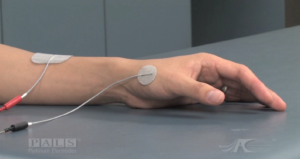
Listed below are some key video examples of upper limb electrode positioning by Axelgaard. Click on the thumbnail below to visit the video link.
Electrode Positions for Common UE Stroke Muscle Groups
Scapular Retraction
Shoulder Flexion/Abduction
Our Favorite Electrodes!
Elbow Flexion
Elbow Extension
Wrist/Finger Extension
Find Evidence-Based Stroke Rehab Equipment. Where do I start?
Finger Flexion
Thumb Abduction
Thumb Opposition
Find Electrical Stimulation Devices
Find EMG-Triggered Stim Devices